
Health News
Health Canada to spend $6M seeking medical isotope alternatives
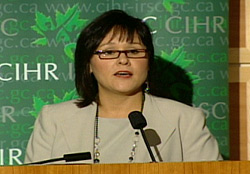 The federal government will spend $6 million on clinical research projects to speed up the development of alternatives to medical isotopes, Health Minister Leona Aglukkaq announced Tuesday.
The funding will be used to look for non-nuclear sources of medical isotopes to supplement or replace technetium-99, used to diagnose cancer and heart problems, Aglukkaq told a news conference at the University of Ottawa Heart Institute.
"We will also support the production and testing of these alternatives to reduce the time it takes to move to clinical trials," Aglukkaq said.
The research funding will be distributed starting on Oct. 31.
On Monday, Health Canada announced that an Australian reactor is a safe and effective source of medical isotopes for Canadians.
Health Canada's approval means the Open Pool Australian Light-water or OPAL reactor can provide molybdenum-99, which is in short supply after the reactor in Chalk River, Ont., was shut down last month due to a heavy water leak. The Canadian reactor is expected to be out of commission for at least three months.
Health Canada has also authorized Lantheus Medical Imaging of Boston to process the molybdenum-99 into technetium-99, an isotope used to diagnose cancer and heart problems. Molybdenum-99 is the raw material needed to make the short-lived technetium-99 isotope for diagnostic imaging.
"This is very good news for Canadian health-care providers and patients," Aglukkaq said in a statement Monday.
"Health Canada has been working hard to secure alternative supplies of medical isotope moly-99 since the Chalk River shutdown occurred. Active engagement with the international community has produced results."
Aglukkaq couldn't say how much of Canada's isotope demand Australia will be able to provide.
The federal government will spend $6 million on clinical research projects to speed up the development of alternatives to medical isotopes, Health Minister Leona Aglukkaq announced Tuesday.
The funding will be used to look for non-nuclear sources of medical isotopes to supplement or replace technetium-99, used to diagnose cancer and heart problems, Aglukkaq told a news conference at the University of Ottawa Heart Institute.
"We will also support the production and testing of these alternatives to reduce the time it takes to move to clinical trials," Aglukkaq said.
The research funding will be distributed starting on Oct. 31.
On Monday, Health Canada announced that an Australian reactor is a safe and effective source of medical isotopes for Canadians.
Health Canada's approval means the Open Pool Australian Light-water or OPAL reactor can provide molybdenum-99, which is in short supply after the reactor in Chalk River, Ont., was shut down last month due to a heavy water leak. The Canadian reactor is expected to be out of commission for at least three months.
Health Canada has also authorized Lantheus Medical Imaging of Boston to process the molybdenum-99 into technetium-99, an isotope used to diagnose cancer and heart problems. Molybdenum-99 is the raw material needed to make the short-lived technetium-99 isotope for diagnostic imaging.
"This is very good news for Canadian health-care providers and patients," Aglukkaq said in a statement Monday.
"Health Canada has been working hard to secure alternative supplies of medical isotope moly-99 since the Chalk River shutdown occurred. Active engagement with the international community has produced results."
Aglukkaq couldn't say how much of Canada's isotope demand Australia will be able to provide.
Other types of isotopes explored At the Society of Nuclear Medicine meeting in Toronto on Monday, experts said the Australian reactor can supply 10 per cent of world demand, and could slowly boost production but it's unclear by how much. Lantheus expects to start receiving moly-99 from OPAL in the next few weeks. Nuclear medical experts are also nervous about isotope supplies since a Dutch reactor is also scheduled to go offline for maintenance in the middle of July. It will be the first time the Dutch reactor and the Chalk River reactor — which together provide 65 per cent of the world's molybdenum-99 — are down at the same time. Approval for alternative types of medical isotopes such as thallium for cardiac scans and sodium fluoride for bone scans has also been been sped up, Aglukkaq said. Also on Tuesday, Ontario's Health Ministry announced it will pay $1.4 million in one-time funding to produce sodium fluoride as an alternative diagnostic procedure for about 2,000 cancer patients. Health Canada has also appointed Dr. Alexander McEwan, past president of the Society of Nuclear Medicine, as a special adviser on medical isotopes. He will provide updates on how patients are affected and will guide provinces, territories and the medical community on using alternatives, the department said.