
What is Samul nori?
Instruments
 |
 |
 |
 |
| kwaengwari | jing | Janggu | Buk |
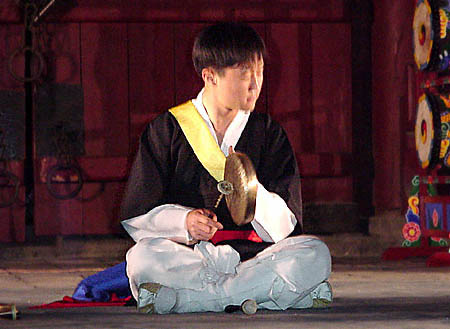
kwaengwari
The kkwaenggwari is a small flat gong used primarily in folk music of Korea. It is made of brass and is played with a hard stick. It produces a distinctively high-pitched, metallic tone that breaks into a cymbal-like crashing timbre when struck forcefully.
A kkwaenggwariIt is particularly important in samul nori and pungmul, although it is also used in other genres.
The instrument's name is probably onomatopoetic for the sound the instrument produces, "kkwaeng-kkwaeng".
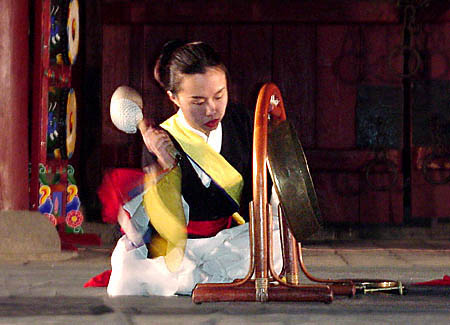
jing
The jing is a large gong used in traditional Korean music, particularly in samul nori, pungmul, and daechwita. It is struck with a large, padded stick and drops in pitch slightly when struck firmly.
Its name was originally pronounced jeong
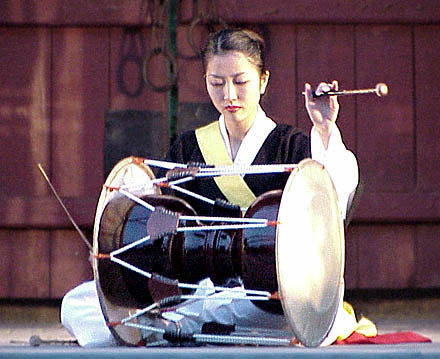
Janggu
The janggu (or janggo; also spelled changgo) or sometimes called seyogo (slim waist drum) is the most widely used drum used in the traditional music of Korea. It is available in most kinds, and consists of an hourglass-shaped body with two heads made from animal skin. The two heads produce sounds of different pitch and timbre, which when played together are believed to represent the harmony of man and woman.
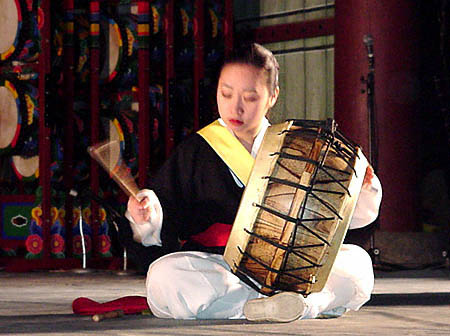
Buk
The buk is a traditional Korean drum. While the term buk is a native Korean word used as a generic term meaning "drum" (the Sino-Korean word being go), it is most often used to refer to a shallow barrel-shaped drum, with a round wooden body that is covered on both ends with animal skin.[citation needed] Buk are categorized as hyeokbu which are instruments made with leather, and has been used for jeongak (Korean court music) and folk music.